Sunday, October 25, 2026 · Cats
Veterinary Mentorship Builds Confidence Beyond Clinical Skills
Noted by Castillo, Therese · 613 reads
New veterinarians need support with client conversations, care constraints and team relationships as well as clinical skills. Mentorship helps them grow confidence.
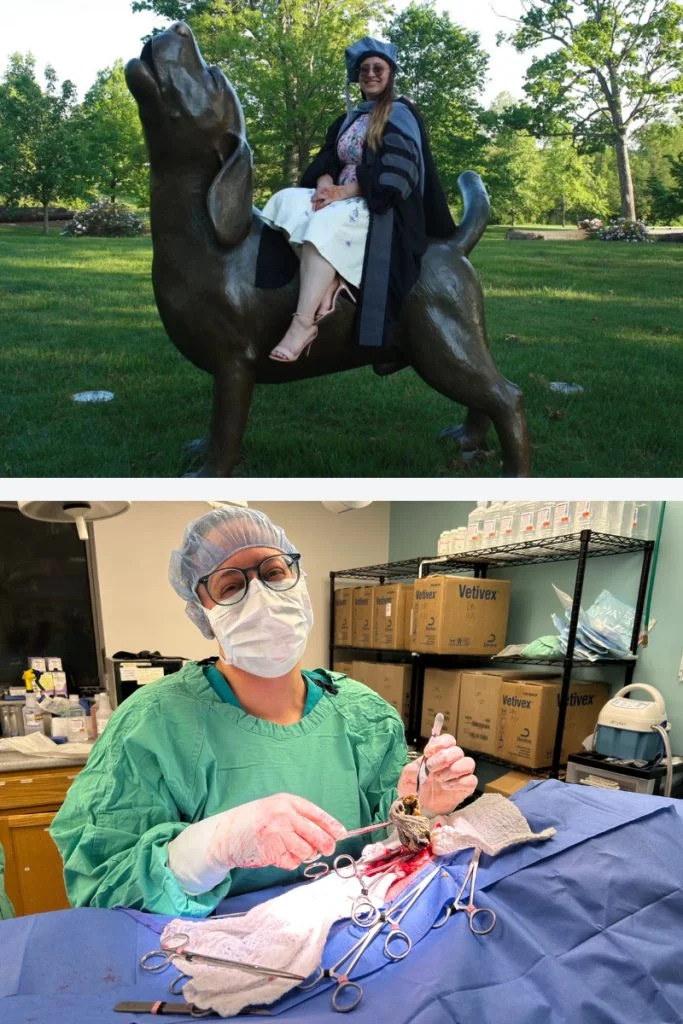
A new veterinarian may arrive with four years of demanding education, a full clinical year and a passed NAVLE. That’s a strong foundation, but it doesn’t yet provide the fluency that comes from repeated practice or prepare someone for every part of working in a clinic. Practices that measure mentorship only by clinical milestones may miss the support new graduates need to stay, grow and care well for clients and patients.
Clinical facts such as drug doses, differential diagnoses and surgical protocols can be looked up. Other skills take practice with people: recommending a plan when the outcome is uncertain, discussing what a client can afford, asking colleagues for help and recovering after a difficult day. These abilities develop through modeling, feedback and a workplace where a new veterinarian can admit uncertainty without feeling abandoned.
The safety net behind early career growth
Starting practice means making independent decisions while still learning how to judge one’s own readiness. New graduates are also building client relationships, figuring out team dynamics and trying to understand how they’re doing in workplaces that may not offer clear feedback.
Qualitative interviews with early- to mid-career veterinarians found that mentors’ “safety net” mattered to whether participants stayed in practice. That support meant more than clinical backup: it meant knowing they weren’t alone in their uncertainty. Some participants said they left their first positions because mentorship was inadequate, and carried the effects of those experiences into later jobs.1
Data from Ready, Vet, Go program cohorts points to a similar need for connection. Among 63 early-career veterinarians, 44 percent of open-ended responses about what mattered most mentioned realizing they weren’t alone. Participants highlighted that shared understanding without being prompted, rather than a particular skill or module.2 For practices, the message is practical: clinical guidance matters, but it doesn’t cover every challenge of the first year.
Make client conversations part of mentorship
Sound clinical instincts don’t guarantee ease in the exam room. Discussing a treatment plan, delivering bad news or responding to an angry client takes modeling and rehearsal, followed by feedback. New graduates may have few chances to practice these conversations before they face them with clients.
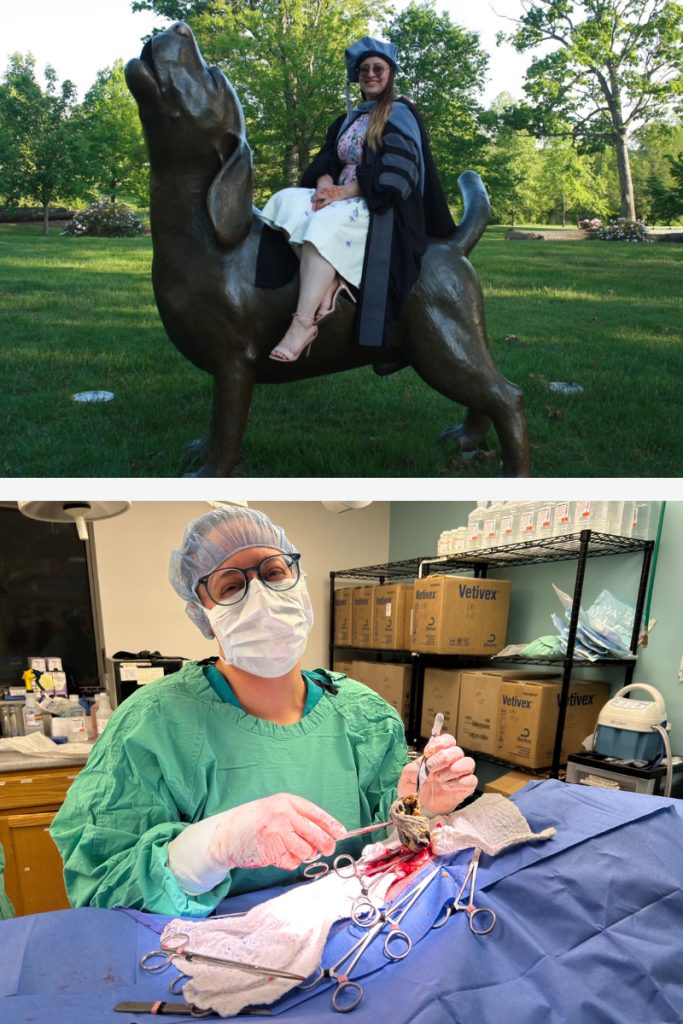
Dani Rabwin describes how her early mentor introduced her to long-standing clients. He presented her as a knowledgeable new veterinarian and told clients their pets would be in excellent hands. The introduction helped establish trust while showing Rabwin how warmth and confidence can put a client at ease.
That mentor also rehearsed difficult conversations with her, including admitting a mistake and speaking with clients who were angry or in denial. The practice felt uncomfortable, but it meant she didn’t have to invent every response in the moment. Mentors can use the same approach: model introductions, role-play challenging scenarios and debrief what happened after an appointment. Discuss not only the diagnosis, but also how the conversation felt and what might help next time.
In Rabwin’s program cohort data, 59 percent of participants reported confidence in client communication at the start of the program; by the end, 91 percent did.2 Participants connected that change with feeling more effective with clients and more settled in practice. Ongoing discomfort in the exam room can follow a veterinarian from appointment to appointment, affecting interactions with clients, colleagues and themselves.
Help new veterinarians reason across care options
Veterinary school teaches new graduates to aim for gold standard medicine. Practice also brings financial limits, distance from specialists, differing client values and patient circumstances that don’t match a textbook example. Navigating those situations requires clinical judgment and clear communication alongside sensitivity to what a client can manage.
A modified plan can prompt several worries at once: whether it will help enough, how to explain it without losing the client’s trust, and whether colleagues will judge the decision. New graduates may also worry about complaints or liability. Rabwin says these concerns recur in her work with early-career veterinarians and veterinary students, shaping how they approach appointments where the textbook recommendation isn’t within reach.
Her mentor practiced in a semi-rural area with a varied clientele. He taught her that good care can mean meeting clients where they are. A modified plan, developed with clinical rigor and honest discussion, can be responsible care that calls for its own skills. Practices can support that judgment by talking through options before a new graduate faces a difficult choice alone, and by helping them find language for discussing cost without shame.
In the program data, the share of participants who felt comfortable discussing cost of care rose from 49 percent before the program to 77 percent afterward.2 Without guidance, new graduates may feel persistent guilt about adapted plans or avoid cost conversations. Neither response helps a patient receive care suited to the circumstances. Mentorship can give them a structure for discussing available options, explaining tradeoffs and inviting the client into the decision.

Build belonging into the first months
A new hire enters an existing team, with its history, relationships and unwritten expectations. Learning how to ask for help, when to trust one’s judgment and how to build credibility takes time. Mentors can ease that adjustment by making introductions, explaining team norms and talking through a difficult interaction with a colleague or staff member.
Qualitative research identified mentoring style, including collaborative support compared with a sink-or-swim approach, as a major factor in how graduates experienced their first positions and whether they stayed.1 The AAHA Stay, Please study found teamwork was the strongest retention factor among the roles surveyed, ahead of compensation and flexibility.3
Belonging doesn’t appear automatically. In a high-stakes clinical workplace with clear hierarchies, mentors can help create psychological safety: a setting where a new veterinarian can ask questions, make mistakes and learn without social punishment. That means making space for routine check-ins and reflection, not waiting for a problem to surface.
Confidence grows through supported action
New graduates often say they’re waiting to feel more confident before taking on a challenge. Rabwin’s view is that confidence tends to follow action. Mentors can help a veterinarian take an appropriate next step with guidance close at hand, then talk through what went well and what they learned.
Rabwin recounts working with a veterinarian two years into her career who was struggling to develop clinical skills. Fear had begun to influence which cases she felt able to handle, when she asked for help and how she presented herself to clients. A turning point came when she performed her first pyometra surgery, with guidance, for a patient whose owner couldn’t afford referral. She was frightened, but the supported experience helped her find confidence and reconnect with her reason for becoming a veterinarian.
The case shows why clinical instruction alone may not be enough. The veterinarian also needed to know that she wouldn’t be left alone in a difficult moment and that a mistake would lead to a debrief, not a lasting mark against her. Ready, Vet, Go surveys found clinical confidence increased significantly even though the program doesn’t teach clinical medicine. The qualitative research likewise found that encouragement alongside clinical guidance helped participants build confidence more durably than correction alone.1
Put whole-practice skills on the mentoring schedule
Broadening mentorship doesn’t have to mean redesigning a practice’s entire training program. It can begin with regular conversations about the parts of the job that clinical checklists leave out:
- Debrief client conversations. Ask how the discussion went as well as what the veterinarian found and recommended.
- Discuss care options early. Help new graduates develop the clinical reasoning and language for conversations about cost and modified plans before they face them alone.
- Support team integration. Arrange introductions, explain local routines and check in on relationships during the first 90 days.
- Make room for reflection. Ask what a new veterinarian is learning, not only whether they’ve met a target. Keep these conversations regular, including when nothing has gone wrong.
- Connect peers across practices. Colleagues at another clinic can offer a kind of shared experience that an in-house mentor can’t provide: reassurance that struggle is common.
- Model the people skills. New graduates learn by watching how experienced veterinarians handle hard conversations, upset clients and imperfect options.
Mentorship supports retention and better practice
When early-career veterinarians receive support across the full range of practice, they have more opportunity to become confident and committed members of a team. When they get clinical backup but are left to manage every other challenge alone, disengagement may happen quietly before the practice recognizes what’s wrong.
New graduates bring a foundation. A thoughtful mentorship program helps them turn it into fluency: clinical judgment, client communication and a stronger place on the team. The work starts with regular, supportive conversations about what practice asks of them each day.
| The Ready, Vet, Go program combines peer group meetings, mentor-led workshops, and on-demand modules to support early-career veterinarians through exactly the transition described in this article. Full cohort outcomes data is available in two companion white papers at readyvetgo.co/outcomes. |
Dani Rabwin, DVM, is the founder of Ready, Vet, Go, a structured remote mentorship program for early-career veterinarians, and editor of Mentorship in Veterinary Medicine (Wiley), released September 2026.
References
- Standage C, Smith P, Jones A, Ritter C. Mentoring matters to early-career veterinarians' confidence, clinical growth and career retention: A qualitative interview study. Vet Rec. 2025;e1–e12.
- Rabwin D. What Changes in a Year: Measured Outcomes from the Ready, Vet, Go Mentoring Programs. Ready, Vet, Go White Paper; 2026.[link to be provided to VPN shortly]
- American Animal Hospital Association. Stay, Please: Factors that Support Retention and Drive Attrition in the Veterinary Profession. AAHA; 2024.